

“Travel is more than the seeing of sights; it is a change that goes on, deep and permanent, in the ideas of living.”-Miriam Beard
Planning an adventure is a thrilling process. Your mind is filled with faraway sights and naïve expectations of what is to come. Partaking in the adventure is even more exciting. The first step off of that plane onto a different continent sends chills of anticipation through your body. Then three weeks of amazing activities, sights, smells, food (most of the time), people and places zooms by and you find yourself home in your own bedroom staring at your pictures with a reminiscent smile. Is this all you have left, pictures, distant memories and maybe a few souvenirs? At first it may seem that this is what Africa has left you with, material objects and captured sights on photographs. But I have found that Africa and traveling in general is much more giving and wise than that. Through my experiences abroad, especially my last experience in Namibia, I have grown in ways that I’m not even aware of yet.

Namibia was full of amazing wildlife. This is one of the main notions that peaked my interest about the trip. From the bush elephants of the north and the lions of the Skeleton Coast to the endemic black faced impalas, Namibia has a lot to offer to a young aspiring wildlife biologist. And in this sense I was not let down at all. I lost count after forty different species of mammals, birds and reptiles. One of the most moving sightings was a herd of about 30 elephants, (Of course I am slightly biased, since this is my favorite animal). As we turned the corner of the road in Etosha National Park, I spotted a huge bull elephant. We drove closer and realized that the bull had company, a lot of company. There we saw several bulls, cows and even calves. Some of the babies were definitely less than 6 months old. I sat in silence and watched in amazement as these pachyderms lumbered along, browsing tree tops with their resourceful trunks, or spraying themselves with mud and water to cool down in the African heat. One obnoxious elephant strutted right in front of us with a big branch in his mouth, and then as if showing off, decided he didn’t like the taste of it and tossed it over his back. We watched the babies play in the mud hole, the mothers keeping an ever watchful eye. I could have sat there for hours soaking up the beauty and serenity of these amazing creatures, but of course they had other places to go, and marched on.
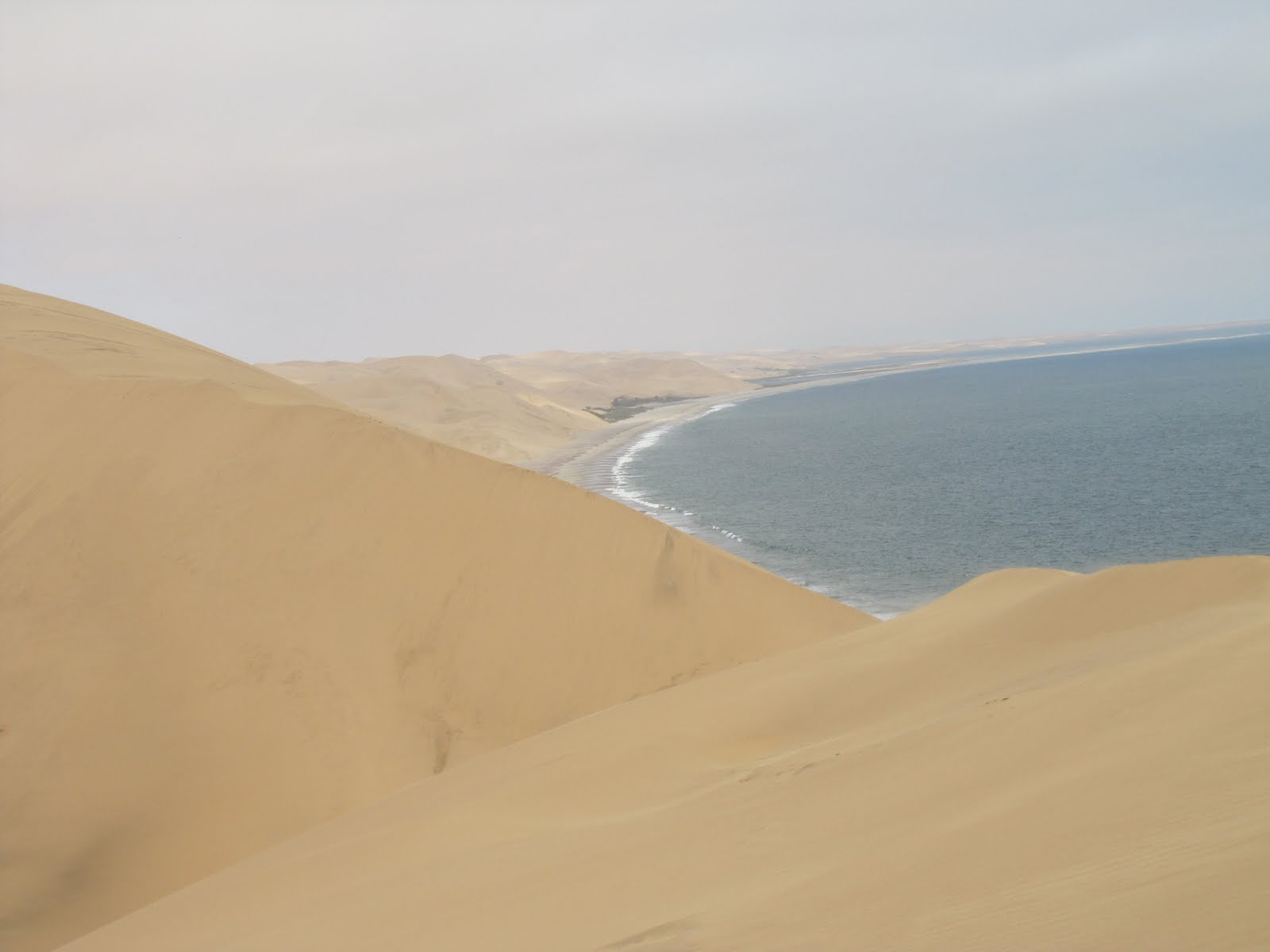
Namibia’s landscapes were breathtaking. For hours all we would see were shrub dessert type land you might find in Wyoming or Nevada. Then looming in the distance would be giant rocks, sometimes jet black, and always full of distinct layers, telling a story of billions of years of formation. The Skeleton Coast was an unforgettable site. After driving along the Atlantic coast, we reached the famous sand dunes of the ancient Namib Desert. We stopped for a while and I attempted to climb all the way up a somewhat vertical sand dune that was probably 80 feet high. The sand easily gave way under my feet, making it much more difficult than I anticipated. However after many attempts, I made it to the top. The reward was completely worth it. I sat there, the fresh ocean breeze lightly kissing my face, the warm ancient sand under my toes. I looked out across the coast and saw a sight that is one of a kind; it is the only place in the world that it occurs. The rolling sand dunes of the Namib Desert plunged into the Atlantic Ocean, creating a unique ecosystem and a beautiful scene.
The wildlife and landscapes of Namibia were truly amazing and unforgettable. But surprisingly, this is not the high point of the trip for me. The people I met in Namibia have changed my views, broadened my horizons and touched my life forever. We had the great fortune to meet and even stay with all walks of life; from farmers, game ranchers, wildlife rescuers, to local tribes and traditional farms. The chance to spend time with each of these types of people is something I took advantage of to the fullest. I asked them questions and had conversations with them about anything and everything; From their native language, sustainability, wildlife conservation, value of carnivores, trophy hunting views, to everyday living and wildlife management. I learned that the people of Namibia and their views are as varied as the landscape and the wildlife. However I discovered one thing they all had in common not only with each other, but presumably with the rest of the world. They all were doing everything they could with what they had to try and eke out a living and provide a life for their families. Sometimes it was not much at all. In the slums of Katatura people found whatever they could to turn a lean-to shelter into their home, using scrap metal and old signs, rocks and wiring. On community conservancies in their traditional farms they used every bit of the cattle and goats as a resource, from consuming their milk, producing butter, using their leather and even using their dung in the construction of houses.
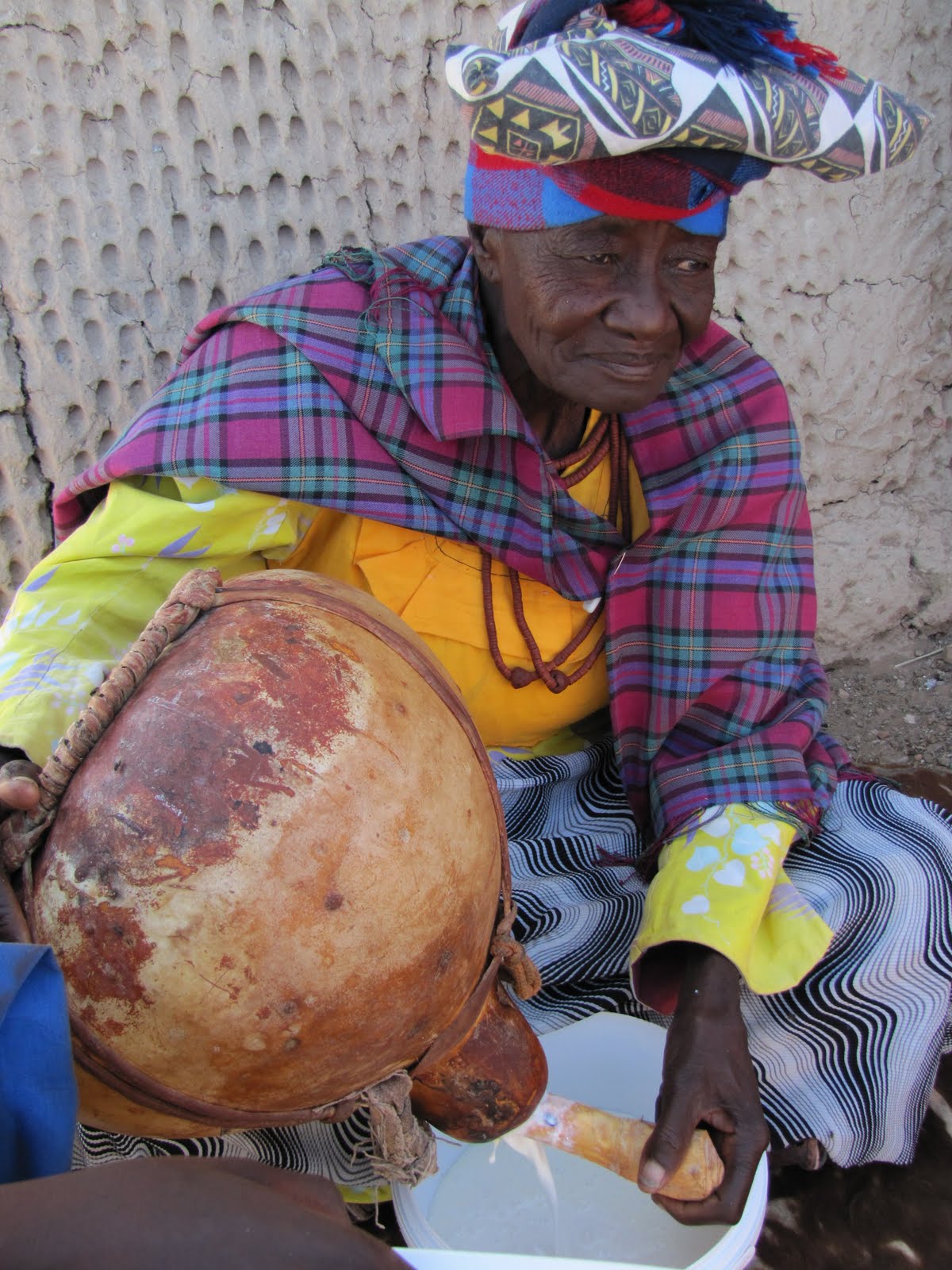
This ingenuity and resourcefulness is something I will never forget. Coming from a culture where we use up our credit cards trying to fill a void in our life with material items, I watched in amazement as the eighty something year old Herero grandmother taught us to make butter from fresh milk using simply a gourd and a stick. As she explained that this was a staple in their diet, she kindly gestured for me to have a seat by her on a pad made of goat skin. In this moment I saw her, matriarch of her family, her skin weathered by the dry Namibian air and sun. She had a glow about her, a sense of pride that can only come when satisfied or at least happy about her life and her family.
Africa has given me more than photographs, souvenirs and mere memories. It has given me these moments I have described and more, and the lessons I learned from each. It taught me the patience and tranquility you feel when observing nature’s wonders, the sense of place it puts you in of your own role on this earth, the respect that grows for every living thing around you, and the appreciation of what you and your family have, when most of the world survives and thrives with a tenth of that.
Like a wise professor, Africa did not shove these lessons in front of my face, but patiently taught me through experience to open my eyes to the beauty of the natural world, open my ears to listen to all walks of life and their views, and open my heart to the full experience, letting it change me forever.
For a video slideshow of my trip, click here:


